


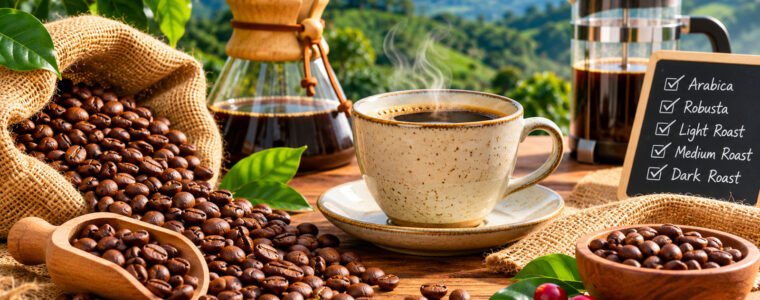
How to Choose the Best Coffee Beans for Home Brewing
How to Choose the Best Coffee Beans for Home Brewing
Making good coffee at home starts long before water reaches the grounds. Bean origin, roast level, freshness, and brewing method all influence what ends up in your cup. The best coffee beans are not necessarily the most expensive or those with the highest ratings. They are the ones that match your taste preferences, equipment, and everyday brewing habits.
Understanding a few basic characteristics makes choosing coffee easier. Whether you use a drip coffee maker, French press, pour-over, or espresso machine, the right beans can help you achieve consistent flavor without complicated techniques.
What Makes Coffee Beans Good Quality?
High-quality coffee beans are typically identified by their origin, processing methods, roasting consistency, and absence of significant defects. These factors influence sweetness, acidity, aroma, and overall flavor balance.
Freshness also matters, although freshly roasted coffee is not automatically better immediately after roasting. Beans release carbon dioxide following roasting, and a short resting period can improve extraction, particularly for espresso.
Good packaging should include a roast date, information about origin, and ideally details about processing. These provide more useful information than vague descriptions such as “premium quality” or “extra strong.”
Arabica vs. Robusta: Which Coffee Beans Are Better?
Arabica and Robusta are the two main types of coffee commonly found in American grocery stores and specialty coffee shops. They differ in flavor, caffeine content, growing conditions, and typical applications.
Arabica Coffee Beans
Arabica generally offers a wider range of delicate and complex flavors. Depending on its origin and processing, it may feature notes of chocolate, citrus, berries, nuts, or caramel.
Arabica is often preferred for specialty coffee and lighter roasts. However, its flavor quality still depends heavily on cultivation, processing, and roasting.
Robusta Coffee Beans
Robusta typically has a stronger, more bitter flavor, with earthy, woody, or dark chocolate characteristics. It also contains approximately twice as much caffeine as Arabica, although actual concentrations vary.
Robusta is commonly used in espresso blends because it can contribute body and a thick crema. Well-processed Robusta can produce excellent coffee, particularly for people who prefer bold flavors.
How Does Roast Level Affect Coffee Flavor?
Roasting transforms green coffee through chemical reactions that develop aroma, color, and flavor. The degree of roasting influences perceived acidity, bitterness, body, and the character of the finished beverage.
Light Roast
Light roasts often preserve distinctive origin characteristics, including floral, fruity, and citrus notes. They generally have higher perceived acidity and work particularly well with pour-over brewing.
Medium Roast
Medium roasts balance acidity, sweetness, and roasted flavors. Chocolate, caramel, and nutty notes are common, making them versatile for drip machines, French presses, and automatic coffee makers.
Dark Roast
Dark roasts emphasize flavors developed during roasting, including bittersweet chocolate, toasted nuts, and smoky notes. They usually have lower perceived acidity and greater bitterness than lighter roasts.
Roast level does not reliably determine caffeine content per serving. The amount of coffee used, bean variety, and brewing recipe have a greater influence.
Best Coffee Beans for Different Brewing Methods
Different brewing methods extract flavor at different rates. Choosing suitable beans helps create a balanced cup, although personal preference remains more important than strict rules.
| Brewing Method | Suggested Roast | Typical Flavor Profile |
|---|---|---|
| Drip coffee maker | Medium | Balanced, smooth, nutty |
| French press | Medium to dark | Full-bodied, rich |
| Pour-over | Light to medium | Bright, aromatic, complex |
| Espresso | Medium to dark | Concentrated, chocolatey |
| Cold brew | Medium to dark | Smooth, mellow |
| Moka pot | Medium to dark | Strong, rich |
Best Beans for Drip Coffee Makers
Medium-roasted Arabica is a reliable starting point for most automatic drip machines. It usually provides a balance of sweetness, moderate acidity, and familiar coffee flavors.
For a more distinctive cup, try a light-medium roast from Central America or East Africa. Proper grind size and water temperature remain essential regardless of origin.
Best Beans for Espresso
Espresso requires finely ground coffee and controlled extraction under pressure. Medium and dark roasts are popular because they often produce a rich, concentrated flavor that works well with milk.
Single-origin beans can create more distinctive espresso, while blends may offer a consistent balance of sweetness, acidity, and body.
Best Beans for Cold Brew
Cold brewing extracts coffee using cool water over several hours. Medium and dark roasts often produce chocolatey, nutty flavors with relatively low perceived acidity.
Light roasts can also work, especially when a brighter flavor is preferred. Grind size, brewing time, and coffee-to-water ratio strongly influence the result.
Which Coffee-Growing Regions Produce the Best Beans?
Coffee origin provides useful clues about flavor, but it does not guarantee a particular taste. Altitude, climate, coffee variety, processing, and roasting all contribute to the final profile.
Colombia
Colombian coffees frequently offer balanced acidity, caramel sweetness, and chocolate or fruit notes. They are versatile for everyday brewing.
Ethiopia
Ethiopian coffees are known for diverse floral, citrus, and berry-like characteristics. Washed and naturally processed examples can taste noticeably different.
Brazil
Brazilian coffees commonly feature chocolate, nuts, and gentle acidity. Their approachable flavor makes them popular in espresso blends.
Guatemala
Guatemalan coffees often combine cocoa-like sweetness with citrus or stone-fruit acidity, depending on the growing region.
How Fresh Should Coffee Beans Be?
Coffee generally tastes best when brewed within a reasonable period after roasting. Whole beans retain their aromatic compounds longer than ground coffee because less surface area is exposed to oxygen.
For many home brewing methods, beans used roughly one to six weeks after roasting can deliver good results when stored properly. Some light roasts and espresso coffees benefit from longer resting periods.
Avoid judging freshness by appearance alone. Dark roasts may develop an oily surface without necessarily being spoiled, although excessive oil can create maintenance problems in certain automatic grinders.
Whole Bean vs. Ground Coffee: Which Is Better?
Whole bean coffee is generally preferable when freshness and flavor control are priorities. Grinding immediately before brewing reduces the time volatile aromatic compounds are exposed to air.
Pre-ground coffee offers convenience but loses aroma more quickly. Its fixed grind size may also be unsuitable for certain brewing methods.
A quality burr grinder provides more consistent particle sizes than a typical blade grinder. This helps improve extraction and reduces the likelihood of uneven bitterness or sourness.
How to Store Coffee Beans at Home
Proper storage protects coffee from oxygen, moisture, heat, and direct sunlight. An airtight, opaque container kept in a cool kitchen cabinet is usually sufficient.
Avoid storing everyday coffee in the refrigerator because condensation and exposure to odors can affect quality. Freezing can be useful for longer storage when beans are divided into airtight portions and protected from repeated temperature changes.
Buying smaller quantities is often more practical than storing a large supply for several months.
Frequently Asked Questions
What Are the Best Coffee Beans for Beginners?
Medium-roasted Arabica beans from Colombia, Brazil, or Central America are practical starting choices. Their generally balanced flavor profiles make it easier to identify personal preferences before exploring brighter or darker coffees.
Are Expensive Coffee Beans Always Better?
No. Price may reflect production costs, limited availability, or specialized processing rather than guaranteed flavor superiority. Proper roasting, freshness, and brewing technique can matter more than price.
How Much Coffee Should I Use per Cup?
A useful starting ratio is 1 gram of coffee for every 16 grams of water. For a 12-ounce cup, approximately 21 grams of coffee with 336 grams of water provides a reasonable starting point. Adjust according to taste and brewing method.
Can I Use Espresso Beans in a Regular Coffee Maker?
Yes. Espresso beans are not a separate botanical category; the term usually describes a roast or blend intended for espresso preparation. They can be used in drip coffee makers when ground appropriately.
Final Thoughts
Choosing coffee for home brewing involves understanding roast level, origin, freshness, and brewing compatibility. Medium-roasted Arabica is a versatile starting point, while lighter and darker coffees offer different sensory experiences.
Rather than relying exclusively on ratings or brand reputation, compare beans using consistent brewing conditions. Small adjustments to grind size, coffee quantity, and water temperature often reveal more about coffee quality than packaging descriptions.